
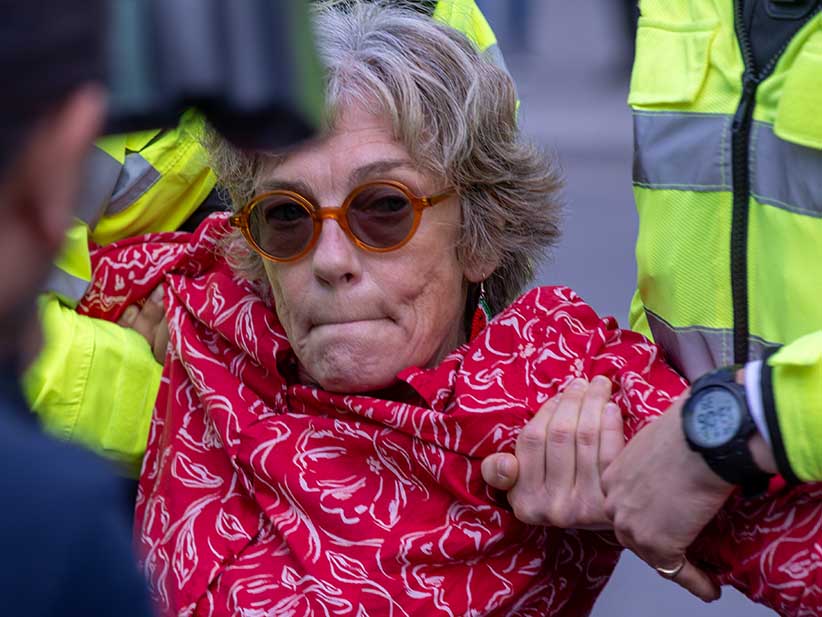
Parliament Square, September 6 2025
I’m gonna start a new series – Even the Guardian – in the spirit of my August 29 post, Even the Guardian thinks Yvette’s a liar.
Regulars know my opinion of the Guardian. On matters, including important ones like abortion or racism in the criminal justice system, that do not seriously obstruct those corporate interests which behind a thinning veil of democracy actually rule Britannia, it can be very good. I had it in mind when I wrote and several times reused this form of words:
On many matters our ‘quality’ media serve us passably well but this enables a greater lie. They must show themselves trustworthy even if it embarrasses high office. (Not only does long term capacity to manufacture consent depend on it. So too, on pain of losing market share, do their business models.) But the trust gained helps them mislead us, more by lies of omission than commission, on matters of critical concern to the power they ultimately serve. Never more so than when vilifying states and leaders in the way of empire designs.
Or as Michael Parenti put it in response to a Guardian columnist much admired by the ‘woke’:
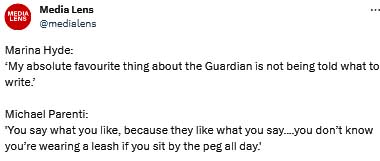
For the limits to the range of that leash, see Dear Guardian Media Group and Julian, Guardian and the law of volitionality. Both focus on the process, well understood by psychologists, of dehumanisation as precursor to more tangible forms of destruction, in this case to see to it that history’s greatest whistle-blower, by a massive margin, on empire criminality was deserted by what should have been his natural support base in the liberal intelligentsia.


Consider too GMG’s services to empire in vilifying Bashar al-Assad to catastrophic end during the dirty war on Syria, its relentless promotion of a demonstrably false ‘Putin’s unprovoked invasion of Ukraine’ thesis and (while it still owned The Observer) its aggressive Sinophobia in respect of Eurasia’s economic challenge to Washington ‘full spectrum dominance’.
Not many will consider such things, I know, but readers here are made of sterner stuff. They do actually practice critical thinking, as opposed to teaching it to undergraduates and prescribing it for Brexit voters.
But back to those matters less crucial to ruling agendas, and/or where the state overreaches to the point of triggering a groundswell of popular pushback. At such times the Guardian must, for the reason given in my third paragraph, bend with the wind.

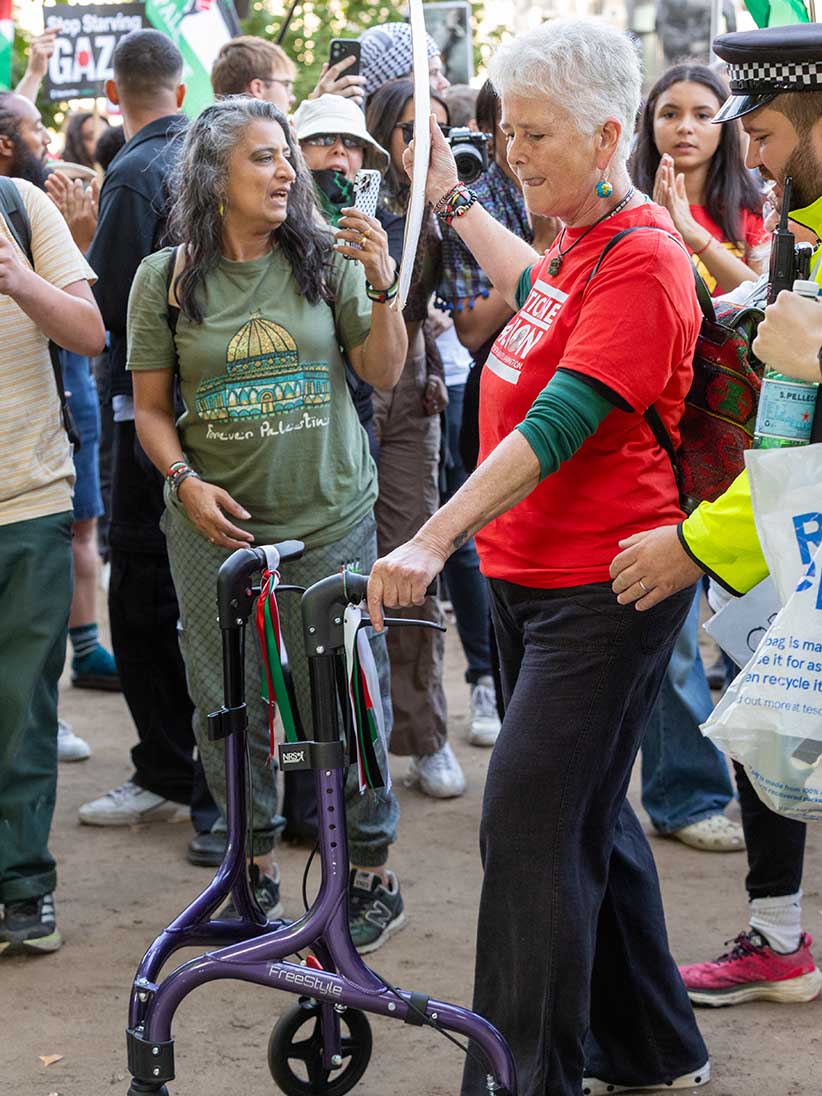
Above and below: Parliament Square, September 6 2025

Without further ado, then, let me offer in its own write my second Even the Guardian post. Like the first, it zeros in on the law I broke on August 9, and saw friends arrested for breaking on September 6. 1
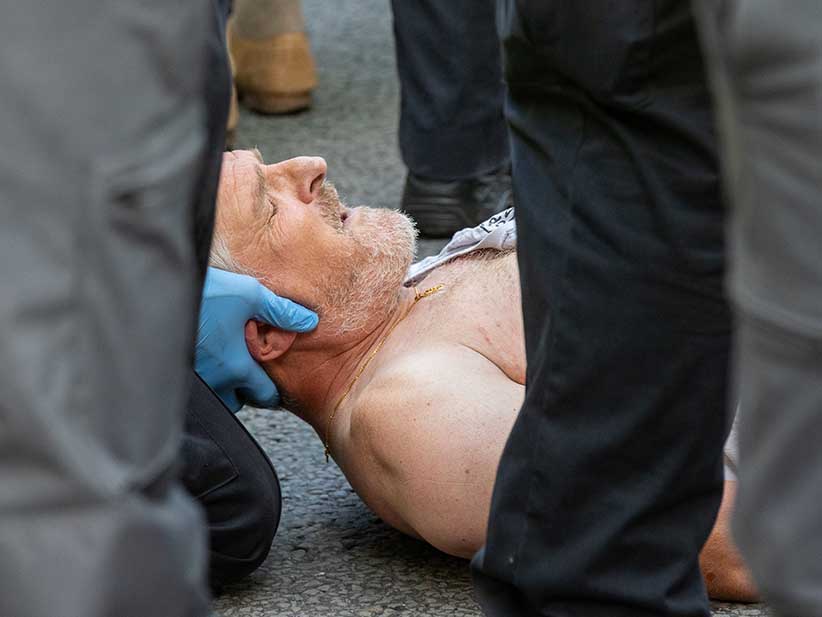
Parliament Square, September 6 2025
It appeared yesterday, September 15, as an editorial.
The court appearance on Tuesday of three protesters charged with terrorism offences because they held up signs declaring their support for Palestine Action should shame the government. The decision to proscribe the group, taken in June, was an alarmingly illiberal overreaction to the damage some of the group’s supporters are alleged to have caused to military equipment. Now ministers and the public are seeing the consequences, as non-violent protesters against the ban are brought before judges.
A long and proud tradition of civil disobedience includes campaigners for women’s suffrage, and against nuclear weapons and the burning of fossil fuels. Yet with its rash decision to lump the kind of direct action practised by Palestine Action in with terrorism, ministers have turned their back on this. More than 1,600 people have been arrested since the ban, many of them middle-aged and older. More protests are planned.
It is bad enough that the UK has, like the European Union, failed to restrict trade with Israel or end arms exports, despite mounting evidence of war crimes. But for champions of direct-action tactics to face the risk of jail, in the same week that the prime minister plays host to President Trump, is a disgrace. As was pointed out when the Palestine Action ban was introduced, existing laws can be used to prosecute individuals who commit crimes for political motives. Currently, 24 people are awaiting trial on charges including violent disorder after an Elbit Systems UK site in Bristol was targeted.
Ministers claimed to have based their decision on an intelligence assessment. But a declassified version of this advice, seen by the New York Times, said that most of Palestine Action’s activity “would not be classified as terrorism”. At a time when police, prisons and the courts are all overstretched, the ban has diverted resources in the wrong direction.
This is the case whatever happens in court this week. The events of the weekend, when 26 police officers were injured at a massive far-right rally in London, makes the government’s skewed priorities even more glaring. Ministers, and the police, appear to have been caught off-guard by the demonstration’s scale and violence.
Unless the home secretary manages to prevent it, Palestine Action’s proscription will be challenged in court in November, on the grounds that it could interfere with people’s rights to free expression and assembly. While the ban stands, the courts should opt for leniency. Harshly punishing people for championing the right to protest would send a terrible signal, at a time when liberal democracy is under growing threat.
But even acquittals would not right the wrong of Palestine Action being proscribed in the first place. Protesters against Israeli brutality in Gaza and the West Bank should never have been dealt with in the same legislative order as Maniacs Murder Cult and Russian Imperial Movement, as happened in July, or placed in the same category as Hamas and Hizb ut-Tahrir.
Following the prime minister’s panicked recent reshuffle, the new home secretary, Shabana Mahmood, should take a different approach. Three independent reviewers of terrorism laws have recommended that proscription orders should be time-limited. Now would be a good moment to revisit a decision that should never have been made.
* * *
- For personal reasons I attended the September 6 mass protest, in London’s Parliament Square, as observer rather than participant. I shot many photos and several minutes of footage but, taken ill on my way home, have yet to post them. The moment unseized, these may now never appear other than in sample form, like those in this post.