
As one of the forty protesting at the arms fair in Farnborough last night (pictures to follow if any good) I offer a few coffee thoughts as I break my journey north to steel city house …
*
Around the 11 minute mark of his chat with Judge Napolitano yesterday – taking in Europe’s humiliation … Ukraine … the sobering fact the sole remaining treaty limiting the proliferation of nuclear weapons expires on February 6 with no prospect of renewal … – Aaron Mate echoed Alastair Crooke by way of a boast by US Treasury Secretary Scott Bessent. 1 Noting US proxy attacks on the rial, the consequent depreciation wrecking small businesses in Iran to provoke ‘bazaari’ protests promptly infiltrated by thugs under CIA and Mossad coordination – until the neutralising of Starlink, likely with Russian and Chinese electronic warfare knowhow, thwarted the second regime change attempt in seven months 2 – Aaron asks why China did not use its dollar surpluses to prop up the rial.
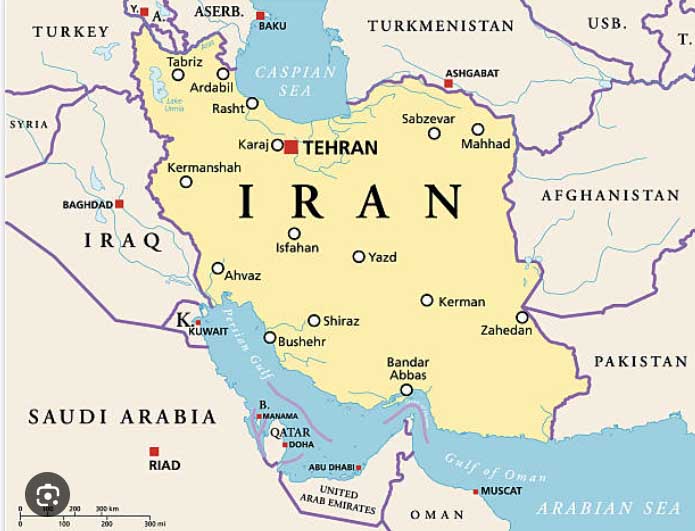
Half of China’s oil imports pass through the choke point of the Hormuz Strait at Bandar Abbas, while Iran is vital to the New Silk Road, one of whose benefits will be immunity to naval blockade imposed at other choke points like Malacca by US maritime supremacy. Vital too to north-south routes linking Russia to Persian Gulf and West Asia.
It’s not rocket science. Should Iran fall to the US empire, the hit to China could hardly be more serious. Aaron’s question merits an answer so far unforthcoming. I never underestimate Beijing, so don’t rule out one being revealed in the fulness of time.
Or not.
*
Commenting on Mark Carney’s speech at Davos yesterday, John Mearsheimer found much to like, but with one caveat. Quoting the section where Carney – who as Governor of the Bank of England, let’s not forget, did his bit to wreck what remained of UK manufacturing via interest rate ‘austerity’ – spoke of an alliance of “medium nations”, meaning those junior imperialisms known as the collective West less the US of A, to build a new rules based order. 3
Nonsense, retorts the ‘offensive realist’ – or as he would say, “that is not a serious argument”. Only great powers can pull off such a thing. And while I don’t share all of his positions, on this we see eye to eye. Which brings me (though not, I think, the professor) back to a view I’ve long held: the best hope for humanity, and it may not be enough, lies in China rising.
*
I’d write more but am tired, the caffeine wearing off. Time to leave this Wetherspoons in Bolsover – free electricity, free wi-fi, all the black stuff I can drink for £1.50 and staff who couldn’t care less if I spend all day in its blog-conducive ambience – to hit the road.
*
Update. I knew, as I packed my laptop to leave Bolsover, there was something else I’d wanted to say but couldn’t put my finger on it. Back at steel city house, a BTL comment on this post by mohandeer jogged my memory. I can’t recall which, but one of the several podcasts I watched yesterday at the Tilly Shilling, a Wetherspoons in Farnborough, made the point that one at least of the positions Trump has had to row back from in his ill considered economic dust ups with China may reflect the limited capacity of a real estate speculator to understand supply chains.
Real estate doesn’t move. Raw materials and components in a globalised economy do. Basic physics tells us that heat neutralises magnets but rare earths offset this otherwise immutable law. It’s bad for the US auto sector, as Trump and Bessent belatedly discovered, that China is the prime supplier of rare earths. But cars use miniscule amounts.
An F-35 US warplane by contrast …
* * *
- Asked by a Fox News presenter if sanctions work, Bessent dissembled by bragging that the attacks on the rial – not to my knowledge previously admitted by Washington – had hurt Iranians. To peoples suffocating under US sanctions, such extensions of ‘economic war’ are lethal. And intended as such on the premise that hurting the common people will cause them to rise up against governments Washington objects to.
- Like Jeffrey Sachs and Max Blumenthal, Aaron is a highly able Jewish critic of Israel who believes, I say wrongly, that Israel dictates US policy in West Asia. John Mearsheimer, a gentile, thinks that too but to insist that Israel gets the US to act against its interests IMO reflects a worldview unable to distinguish the interests of most Americans from those of its ruling oligarchs: see US Neocons & Israel’s far Right. Yet one of many astute points Aaron makes to the judge is that where most states calculate threats on the basis of two factors – military capability, and intent – Israel cares only about the former. A state in the region that Israel cannot attack without fear of reprisal is a Threat To Be Taken Out.
- As I was writing this paragraph a Media Lens alert landed in my inbox. I’ve only skim-read The Weak Must Suffer but welcome its setting out why Carney’s speech merits at best two half-hearted cheers.
Mark Carney?
That would be this Mark Carney……
https://www.youtube.com/watch?v=HfE0MWUpoOs
…….signalling very clearly the policy of Perfidious Albion.
I still think that China has, without declaring war or even dropping a warhead, has done for the rial what it has done for the ruble, remnibi & rupee…the following from AfricaNews123:
” China activated another lever: mobilizing the Global South. At 4:22 p.m. on January 4, Chinese Foreign Minister Wang Yi offered Brazil, India, South Africa, Iran, Turkey, Indonesia, and 23 other countries immediate preferential trade terms, conditional upon their public refusal to recognize any Venezuelan government installed through U.S. support or intervention. Within less than 24 hours, 19 countries accepted the offer, led by Brazil, followed by India, South Africa, and Mexico. The concept of a “functioning multipolar world” thus became a concrete reality. China succeeded in instantly forming an anti-U.S. coalition by wielding economic incentives.
The “final touch” came on January 5, when Beijing activated the financial weapon. China’s Cross-Border Interbank Payment System (CIPS) announced an expansion of its operational capacity to process any international transaction seeking to bypass the U.S.-controlled SWIFT system.
China thus provided the world with a full-fledged and effective alternative to the Western financial system. Any state, company, or bank wishing to conduct trade without relying on U.S. financial infrastructure can now use the Chinese system, which is 97% faster and cheaper. The response was immediate and overwhelming: within the first 48 hours, transactions totaling $89 billion were processed, and central banks in 34 countries opened operational accounts within the Chinese system—accelerating the de-dollarization of one of the United States’ key funding sources.
On the technological front, China controlling 60% of global rare earth production, vital to semiconductor and electronic component manufacturing announced temporary restrictions on exports of these minerals to any country that supported President Nicolás Maduro’s abduction. This decision alarmed U.S. tech giants such as Apple, Microsoft, Google, and Intel, whose production systems could face severe disruption within weeks. Every Chinese move strikes directly at the economic heart of the American empire.
“What did China do for Venezuela?” allies and adversaries alike ask. The answer is now clear: without declaring war, China acts, influences, and imposes new realities.”
Although I am sure you have read it, China has in it’s own inimitable way given the US a slap in the face and given Iran further opportunity to absorb the consequences of Trump’s idiocy and lawlessness. Not sure how much more we can expect if China is to show it’s strength and a Canada/China rapprochement is only hammering home China’s superiority in global affairs and further emboldening the global south.
Perhaps I’m missing something, in which case feel free to enlighten me.
Regards,
Susan
Larry Johnson’s SONAR21 blog covered this story yesterday, via a source which reprinted it.
The BTL the line comment was, let’s go with illuminating, as a small number of posters insisted that:
– the author is an asset of Von der Layen
– the publication is a front
– the information contained in the article is misinformation and never happened.
Interestingly, the same head in the sand approach can be seen across multiple issues – not least that of the videos and testimony of issue after issue coming out of Minneapolis.
I think it was Larry who coined a new soubriquet for VdL – Ursula Fond of Lying!
I don’t know that you’re missing anything, Susan, and hope you’re right. It beggars geo-strategic belief that China would not do all it can to help Iran. That said, I’m not sure either way of the reliability of Africa News, though I featured the piece you cite eight days ago in From Minnesota to … China.
What’s your experience of it?
Btw, your reference to China’s de facto monopoly over rare earths has jogged my memory. I’m about to add a new mini-topic to this post.
I listened to a podcast last night in which one of the two guests was Larry Johnson.
Who made a very strong point about rare earths. This being that the key issue is not that places like the USA and other Western or Global South nations* don’t have them – they do – but that China has around 97%-98% of the 9very environmentally dirty) processing plant and technology which makes it economic to separate them out from the other elements they are mixed in with.
*In the context of the present trajectory, it seems prudent to leave open the question as to how long it will remain the case that there are other sovereign states on the planet outside of the USA.
But that’s maybe just the cynicism of age affecting my judgement?
That’s my understanding too. Rare earths aren’t rare but their tiny concentrations place commercially viable extraction beyond the reach of a West which has for decades offshored manufacturing.
Or is Larry’s a different point?
That was Larry’s point in a nutshell.
Along with the Chinese monopoly of the processing technology.