
Nothing is isolated; everything connected. If I’ve neglected Palestine of late, that’s not all down to surging demand on my time during the most epic few weeks, on the global stage, of my life. Contrary to what many otherwise invaluable voices declare, Israel has never dictated US policy. As I argued in US Neocons & Israel’s far right, such a view fails to give due weight to class. The US does not “fight Israel’s wars”. It fights those of a ruling oligarchy whose interests align with the goal of a Greater Israel to further balkanise the region.
As it has now balkanised Syria, and hopes to repeat in Iran.
So I welcomed an excellent Mondoweiss piece two days ago on Trump’s “Board of Peace” for Gaza, whereby a junta of billionaires, hardcore Zionists and pliant Arab aristocrats – with not a single Palestinian included – is to rule that crime scene of the century with King Donald holding absolute veto. Nominally at least.
Mondoweiss’s choice of title is self explanatory: The US occupation of Gaza has begun.
In similar vein the threat to Cuba posed by the US stranglehold on Venezuelan oil cannot be divorced from the overarching reality of Washington’s ever more reckless efforts to maintain global supremacy, and consequent confrontations with Russia in Ukraine, China in the South Pacific.
To name but two.
Which leads me to the imminent threat to Iran. Yesterday’s post spoke of the chessboard, and differentiated Venezuela (and by extension Cuba) from Iran as a contrast between pawn and rook. It’s not just that Russia and China are ill placed to challenge US might in the Caribbean. It’s also that US coups in Havana and Caracas – so far not fully realised in either – would be serious blows, yes, but on nothing like the catastrophic scale of Tehran falling to Washington.
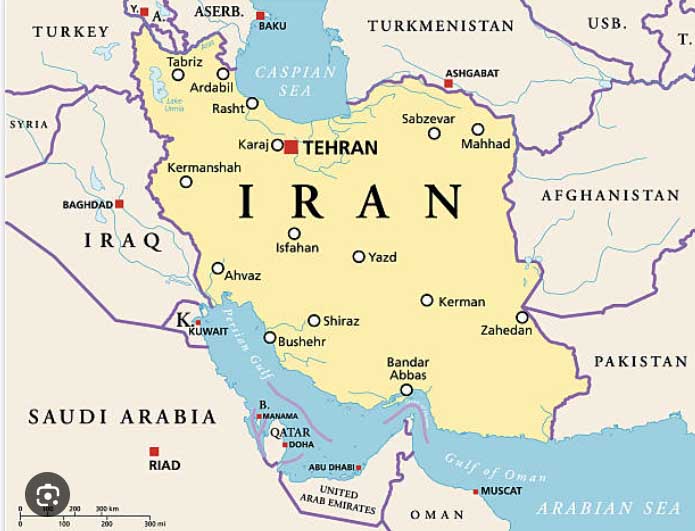
Half of China’s oil imports pass through the choke point of the Hormuz Strait at Bandar Abbas, while Iran is vital to New Silk Road, one of whose benefits will be immunity to naval blockade imposed at other choke points like Malacca by US maritime supremacy. Vital too to north-south routes linking Russia to Persian Gulf and West Asia.
Will there be war between the US and Iran? If so, what will China and Russia do? We may know the answers to both shortly, perhaps even before today is out. In recent posts I’ve seen cause for stern optimism in such a war being existential for Iran, her capacity to bloody the US and annihilate Israel on show to the attentive last June.
Cause also for stern optimism in the deterrent effect of some voices at least in America’s deep state knowing that neither Beijing nor Moscow can stand idly by, whereas the US does have the option – humiliating though it may be – of backing off. 1
But even when seeing grounds for hope, I stressed the limits on human ability to gauge with the requisite accuracy the cross currents at work here. It would take one braver or more foolhardy than me to call it. Nor do I wish to make the very error – of conflating national with oligarchic interest – I counsel against. To the casual eye, Tehran, Beijing and Moscow have more skin in this game. But let’s not underestimate the danger facing the US ruling class from the decline of dollar hegemony, and with it the ‘exorbitant privilege’ it conferred.
Yesterday I featured an essay of guarded hope, translated from Italian and brought to us in a three piece suite by Ismaele. Today I feature the other two, less optimistic. The focus of the first of these may seem tangential but bear with it. The breathtaking extent of criminality it details, in a financial stratosphere beyond our ken, serves as precursor to the second and much shorter piece which takes us back to why the battle for Iran may be more existential for US elites than meets the eye. As that second piece notes, the abyss they are staring into:
is literally “forcing” the US to attempt regime change, both in Venezuela and Iran, in the hope of stemming the haemorrhage that has affected its currency.
(NB: The link to both pieces is the same as that for yesterday’s.)
The Silent Theft: The operation that the system does not mention
There is a noise that does not appear in financial charts and does not reverberate through the halls of Wall Street. It is an ancient, muffled noise that cannot be heard until it is too late: the sound of metal leaving the vaults.
That is where the silent theft begins.
While the world was chasing cryptocurrencies, unicorns and new stock market records, another story was unfolding in the precious metals markets. A story of armoured doors opening, decisions made away from the spotlight, and transactions that the system prefers not to talk about.
The history of precious metal trading is as old as mankind, but this chapter dates back to 2008, when Bear Stearns, one of New York’s largest investment banks, officially collapsed under the weight of toxic mortgages.
Officially, that is. Because those who frequented COMEX – the main American exchange where precious metal contracts are traded – knew that a time bomb had already been set off in its balance sheets: a leveraged position on silver so huge that it was unmanageable. When the price per ounce rose to $21, the bank no longer had the margin to sustain that bet. It was the coup de grâce.
It was at that moment that JP Morgan entered the scene. The operation was described as an act of financial heroism, but the numbers told a different story: Bear Stearns was taken over at liquidation prices, JP Morgan collected billions in government-guaranteed interest for “saving” the system and, above all, inherited the most explosive position in the precious metals market. It was a double scandal: a below-cost bailout and a jackpot on interest. But the real prize was invisible, kept in its vaults.
Years later, Bart Chilton, commissioner of the CFTC [Commodity Futures Trading Commission] – the federal agency that is supposed to prevent abuse in the derivatives markets – recounted what he had seen from the inside. When JP Morgan took over Bear Stearns, it should have quickly closed or reduced the gigantic bet on silver that had contributed decisively to the bank’s collapse. Instead, it obtained a special exemption, a permit that no other operator would ever have received, allowing it to maintain a huge position on silver derivatives.
According to Chilton, that exemption did not serve to dismantle the risk, but to consolidate control of the market. The position did not diminish: it increased. And when he tried to push for formal intervention, he found himself up against a wall. “Political decision”, they told him. In 2019, now out of office, he decided to speak out publicly. A month later, he died. Officially, it was from a known cancer. Unofficially… the question remains: was it a deathbed confession or punishment for speaking out?
The following year came official confirmation of what Chilton had reported.
In 2020, JP Morgan agreed to pay a $920 million fine for years of manipulating the gold and silver derivatives market: exactly the behaviour he had tried to stop. A huge sum, but irrelevant compared to the profits accumulated. The system found its convenient scapegoat: Michael Nowak, one year and one day in prison. The rest remained intact.
Aside: for more depth on the manipulation of gold prices, including by the Fed and European central banks, see Nick Corbishley’s Naked Capitalism piece of January 27th. While its start point is German talk of repatriating gold stored in US vaults, its wider investigation makes it an essential adjunct, for those new to such matters, to this post.
Then, in the fourth quarter of 2024, another signal arrived. Silent, but unequivocal. The United States returned to being a net importer of gold. It wasn’t front-page news, but for those who observe physical flows, it was a wake-up call: when a country that prints the world’s reserve currency starts buying metal again, it means that something is stirring beneath the surface.
In January 2025, the first cracks appeared in bar deliveries: the Bank of England announced that it was experiencing “logistical problems” in delivering the metals. The explanation was so implausible that it seemed like a coded message: the vaults were emptying.
Meanwhile, President Trump signed the GENIUS Act, a law requiring every Dollar-pegged Stablecoin to be backed 1:1 by US Treasury or ultra-liquid assets.
A technical rule, seemingly harmless, but one that created a synthetic and inexhaustible demand for government bonds. More Stablecoins meant more mandatory purchases of Treasuries. And the interest generated by those bonds, billions a year, ended up in the hands of private issuers. According to some analysts, those flows could be reinvested in physical gold.
It is in this context that everything that happened next takes on another meaning.
A few months later, Bo Hines – known as the “crypto czar” in the White House – left his post to become CEO of Tether USAT. In the meantime, the issuer had already accumulated 435 tonnes of gold.
Why did a Stablecoin issuer that was buying gold even before the GENIUS Act came into force feel the need to bring on board the very man who had helped write its regulatory architecture? The question remained unanswered, like a clue left halfway through.
There is also the shift in capitalisation that is taking place in the cryptocurrency markets in favour of Stablecoins, a movement that ultimately erodes the original intent of Bitcoin’s architecture: to remove the issuance and control of the medium of exchange from private actors supported by governments. A perfect heterogenesis of ends.
Then came December 2025, and from that moment on, it became impossible to ignore what was happening. The COMEX – the American metals exchange, which usually delivers very little physical metal – began to release quantities not seen in half a century: tens of millions of ounces of silver and millions of ounces of gold, totalling hundreds of tonnes. Not contracts, not digital promises: real bars, dragged out of the vaults as if someone had decided it was time to take them away. For a market accustomed to delivering less than one per cent of contracts, it was like watching a river reverse its flow.
In January 2026, TD Securities – the trading arm of Canada’s TD Bank – already losing millions on metals, took a gamble on silver, calling the rise a “devilish blow-off top” (a “diabolical” speculative peak). In one week, it burned through another six hundred thousand Dollars [$600,000].
And while the present showed increasingly obvious cracks, a voice from the past returned. Judy Shelton said publicly that Trump had confided in her his intention to peg US bonds to the value of gold on 4th July 2026, a symbolic date: the 250th anniversary of the United States. Zero-coupon government bonds, redeemable directly in physical metal. It was not an official project, but a hypothesis discussed at the highest levels, made even more significant by the fact that US gold reserves are still valued at £42.22 per ounce, a purely nominal value. According to various analyses based on VanEck data and the real weight of gold in the monetary system, a revaluation to the monetary levels hypothesised by analysts could generate an increase in assets in the trillions of Dollars.
This would have an enormous accounting effect, capable of rewriting the federal budget without touching a single tax rate.
But when the vaults are emptied, when epoch-making laws pass without debate, when those who try to speak out disappear at the least opportune moment, when the dominant nation decides to change the rules to avoid destinies imposed on others, the silence on all this ceases to be neutral. It becomes a clue. There is no need to believe in a conspiracy: just look at the facts.
The US is heading for a monetary reset, taking the rest of the planet with it, and – whether orchestrated or simply inevitable – it will not really matter to those who make the rules and will not come with an official announcement.
Perhaps this is how it will really happen: bar after bar, ounce after ounce, while the world is distracted by other things. And when we finally look up from our screens, we will discover that the rules have changed. And with them, so has what we call “currency”. The wallets we still carry in our pockets today will be nothing more than relics of a bygone era… along with the value of the means of exchange that characterised it.
*
But what humanitarian rights in Venezuela and Iran? Regime change serves to save the petrodollar!
Given that it is very difficult to defend both Maduro’s government and that of the Ayatollahs in Tehran across the board …
The author almost lost me here. For reasons set out in numerous recent posts, I have no difficulty defending Maduro’s government or the Ayatollahs against US imperial rapacity. I let it pass though.
… the reasons why the US is removing the former and currently planning to re-attack and remove the latter are many and varied. Let us limit ourselves to the “ethical, humanitarian” and “economic, geopolitical” ones.
The dominant narrative is that the West, led by its business-minded Sheriff, wants to restore order and Pax Americana in those countries for ethical and humanitarian reasons. Unfortunately, this argument, even if only minimally true, is merely an alibi and allows for a media debate that distracts from the dominant motive, namely the economic and geopolitical motive based on the “crisis of the US dollar and the immense imperial public debt”.
Obviously, as long as the West considers that $38 trillion of public debt is not as obscene as an authoritarian regime, but is tolerable for the planet, it will focus only on the first aspect: “intervening to restore lost freedom to oppressed peoples”, a mantra that no longer convinces anyone except talk show hosts and newspaper headline writers.
The reality is quite different: in order to remain standing, albeit on crutches and increasingly shaky, US public debt needs the Dollar to maintain its status as the “world’s reserve currency”. Only in this way will there still be someone willing to buy US bonds and thus help justify the existence of a monstrous public debt. But in order for the US Dollar to remain “hegemonic”, it MUST continue to be used as the preferred currency in global trade and, in particular, it SHOULD be the only currency used to buy and sell raw materials and energy resources, primarily oil. This has been the case for the last 50 years!
This “practice”, known as the “petrodollar law”, imposed in 1973-74 on OPEC countries and then on the whole world, following an agreement between [Henry] Kissinger and the Saudi monarch of the time, justified the ad libitum issuance of Dollars by the FED because every treasury needed to have greenbacks in its coffers to deal with emergencies and energy purchases and therefore agreed to buy “dollar chips – printed paper money”.
The first two leaders who attempted to break this agreement by proposing to sell oil in other currencies were, in order: Saddam Hussein and [Muammar] Gaddafi. Do you remember what happened to them?
In 2012, Iran began selling oil in Rubles and Yuan, and some prominent US analysts wrote that “it is the end of an era”. Subsequently, other oil-producing nations, including Russia, of course, began selling in currencies other than the Dollar. Venezuela has been selling to China in Yuan for years, and Saudi Arabia itself has refused to renew the petrodollar pact since 2024, after 50 years, and now sells oil in different currencies.
It so happens that the countries mentioned all occupy important positions in the BRICS+ area: the geopolitical conglomerate that is proving to be the antagonist of the third millennium with respect to the post-war US empire.
Now do the maths: if Venezuela and Iran, two of the world’s largest oil producers, continue to sell “black gold” in currencies other than the Dollar and if (as is the case) they sell through China to the BRICS+ countries, and if, in doing so, the Yuan’s share of world trade continues to grow… how long could the hegemony of the US Dollar last before Washington is buried under the mountain of waste paper that Dollars would become?
This, then, is the real reason that is forcing, literally “forcing”, the US to attempt regime change, both in Venezuela and Iran, in the hope of stemming the haemorrhage that has affected its currency.
The attempt was also to change the regime in Russia by encircling it, but they got bogged down with the whole of NATO. The idea is: “change the regime in Saudi Arabia too?” I don’t know. But if it continues like this, it cannot be ruled out.
Obviously, if this is the case, China and Russia will not stand idly by, so we may be very close to the end of the line. Until Maduro’s removal, it seemed that the three Tsars had drawn the boundaries of a New Yalta. Today, it is no longer clear whether [Donald] Trump is forced to do what he is doing, with all the consequences that will ensue. Fasten your seatbelts because we have entered an area of great turbulence.
Let’s hope for the best.
* * *
- In June, recall, Trump had a face saving off-ramp in a tacit agreement that the US could do dramatic but ineffectual air strikes on Fordow and other Iranian nuclear facilities, to be followed by an Iranian strike on US assets in Bahrain; its timing notified to Washington in advance to allow withdrawal of high value targets. But on RT with John Mearsheimer the other day, Alastair Crook, a cautious and unboastful but well connected man, spoke of Tehran contacts informing him of a Washington request this week along the same lines being met with a firm refusal. He spoke too of a request by Israel – risibly disingenuous it seems to me – that it be kept out of any war between the US and Iran!