Yesterday I offered a short read on the idiots who, from diverse political worldviews – and with levels of enthusiasm ranging from bring it on gung-ho, through peg on nose ‘lesser evil-ism’, to pious condemnations which give slyly de facto support – back an empire strike on Iran.
I followed with two on UK media complicity.
This weekend, with me debarred by a shoulder injury – I should never have thrown that ball for Tebay with such repeated force – from driving to London for the Palestine March, and having left it too late to go by bus, I’ll be offering three more; the first and longest today, the other two tomorrow.
It seems a decade or more since I first encountered, with her chancellor thrown under a bus in the end game of Liz Truss’s UK premiership, the term zugzwang. I just checked. It’s thirty nine months. We gauge the passing of time by scale and frequency of change, so can you blame me for getting this so awry?
Originating in chess, the term refers to a situation where it’s our turn to move and we still have options on how – but whichever we choose must worsen our position.
In the essay presented here, chess allusions aren’t confined to zugzwang. In a tacit rebuff of those within Alt-media circles who say China and Russia could’ve done more to help Venezuela, it argues that Venezuela is a pawn, Iran a rook. Pawns should not be sacrificed lightly but chess masters frequently must sacrifice them to advance the long game. 1
(If you find board game analogies distasteful, given the human suffering, try to set aside that very natural response and focus on where they lead the author.)
It further argues that useful insights into the strategic approaches of the three key players – a global hegemon since 1945 and unchallenged for over two decades after the fall of the USSR, a new economic superpower, and a battle hardened military heavyweight – are afforded by their national games. The Russians play chess, the Chinese play go – both rewarding patience, deep strategy and spatial analysis – where Americans play the holy game of poker.
(While the US has proved no slouch in delivering grand masters, few would say chess speaks to its soul and psyche the way it does Russia’s. And that’s what we’re speaking of here.)
I’m wary but not dismissive of idealist analyses. In any case, there’s no dearth of material evidence in Franco Maloberti’s January 21st piece, translated from Italian by Ismaele, to rein in any tendency to the metaphysical.
I’m wary too – though perhaps not wary enough – of wishful thinking. But any tendency in that direction will be corrected by the two pieces, also brought to us by Ismaele, I’ll be featuring for your Sunday erudition.
Meanwhile make yourself a coffee and settle down with this thought provoking offering in which Iran is no pawn, but a bishop or rook to a wider game.
The West and Zugzwang: the inevitable end of hegemonic domination
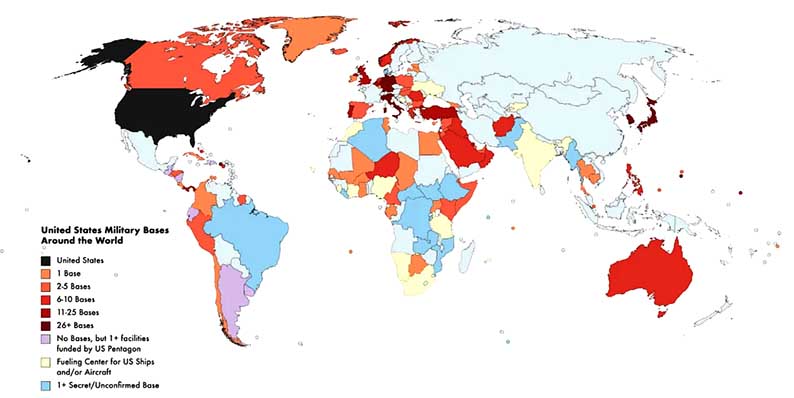
Some time ago, I wrote an article entitled “The Future That Will Come”1 and pointed out the three forms of power that supported US hegemony, servilely supported by vassals, vavasors and valvassini. With regard to vassalage, to understand the hierarchy and bonds of dependence, one need only look at the number of US bases in various countries.
The vassals, the great nobles, are nations with fewer than ten American bases and a large territorial extension (such as Canada, Australia and Saudi Arabia). The vavasors are small countries, typically with 5-10 bases; among these are the United Kingdom, Spain and Norway. African countries, although they host military bases, are excluded from the competition. Finally, we have the valvassini, those with more than 26 bases on their national territory: these include Italy (which “hosts” around 120 US and NATO military installations and more than 12,000 American military personnel), Germany, Japan and South Korea. Halfway between the latter two categories are other countries in Europe, Asia and Latin America.
The map below also shows the so-called Global South, which has no US military bases and is now in opposition to the West.
The pseudo-feudal hierarchical structure allows (or allowed) the ruler to control territories, mobilise troops or delegate responsibilities. As in the Middle Ages, vassals receive protection and benefits in exchange for their loyalty to their lord (but always to a lesser extent than what they have to give). The modern valvassore is not a vassal of the vassal, but a lesser vassal who must give much more than he receives. Today’s valvassino is like a salaried knight, who must be absolutely loyal, rewarded with pats on the back and maintained by his lord with a few pieces of green paper printed with the face of some past president.
The forms of power indicated in ref. 1 were military, economic and “soft”. The erosion of these three forms of power is at the root of the decline of the West. The prediction was that the decline would be relatively slow, as the disintegration of economic and “soft” power took time. The prediction made for the final structure was that the South of the world, called the “New World”, would be as follows:
The new world will no longer have economic, financial, or commercial relations with the “beasts”. The rule is: do not feed the beast, because if you feed the beast, the beast will eat you. And this is the only way to free ourselves from Western hegemony. There have been many attempts to make the West understand that there is room for everyone, but they have all been in vain.
The path towards that final outcome was conditioned by economic growth in the South, technological independence, awareness of the West’s “bullying” nature, and the end of economic, military and “soft” power.
The acceleration imposed by the “politics” of Trump and his ill-fated European vassals changed the surrounding conditions and also accelerated the path towards the abyss for the lord, his vassals, his vavasors and his valvassini.
One aspect not explored in depth in the previous article concerned the strategic ability of the leading countries of the New World. For example, no consideration was given to the Chinese’s remarkable skills in logic games such as Go (Wei Qi) or Tangram, which develop strategic thinking and long-term planning skills. Nor was any consideration given to India’s strong tradition of logic and strategy games, developed through board games such as Carrom, and the well-known Indian ability for abstract reasoning and mathematical problem solving.
Finally, Russian culture, which values strategic thinking and the ability to solve complex problems, has also developed thanks to board games such as chess and backgammon. Americans, on the other hand, while boasting individual contributions to the development of mathematical logic, have a laughable cognitive logic base; their ability is more favoured by card games such as poker and blackjack, which require cunning and immediacy.
The clash between two diametrically opposed approaches to strategy has led to the evolution we are currently experiencing. Furthermore, we must consider the dramatic state of the West’s debt situation, an aspect that was not adequately taken into account in the previous article. It must be said that it is not the debt that counts, but the return on the debt.
Large investors (that’s what we call modern loan sharks) know very well that the debt cannot be repaid, as it far exceeds the gross domestic product of entire countries. Instead, it is the interest that matters, as it is paid regularly and, if anything, contributes to increasing the debt. It follows that reducing debt is unnecessary or even detrimental.
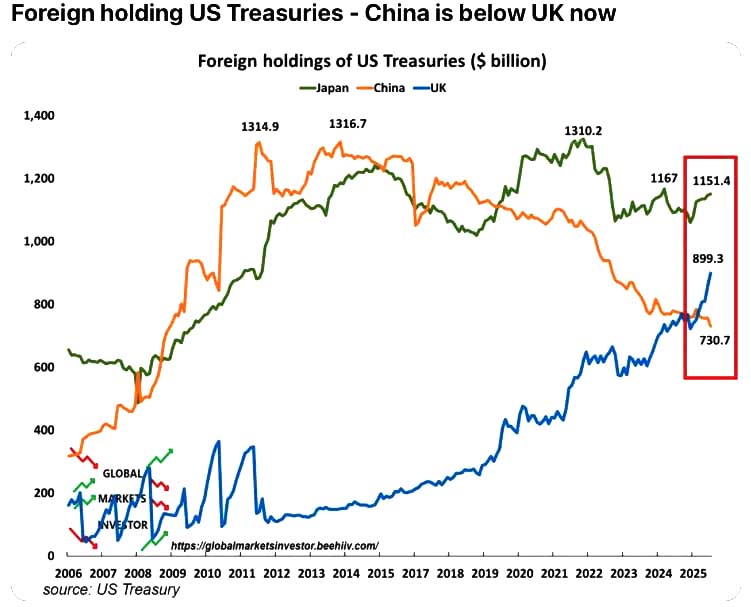
What matters is verifying the ability to pay interest. Only when the situation is close to total collapse do creditors pull the plug, but this is a last resort. Rather, when someone starts to get rid of debt, those with an interest in supporting the Ponzi scheme immediately buy, avoiding collapse. The figure [below] shows that, when China sold US Treasuries, there was an equivalent purchase by the City of London.
The gnomes may be greedy, but they are not stupid. The serious problem will arise when Japan decides to throw off the American yoke, possibly remembering the two [atomic] bombs dropped some eighty years ago [on Hiroshima and Nagasaki on 6th and 9th August 1945]. The risk is frightening, but fortunately it has been postponed with the appointment as Prime Minister of the pro-American Sanae Takaichi, recently embraced and kissed by her Italian namesake [sic – it should be Giorgia Meloni], a seller of ice to Eskimos, but a valid ambassador for high-end Italian prêt-à-porter. The above is the scenario that perhaps justifies the curious American strategy.
It is plausible to think that voracious creditors will not be satisfied with the niceties of rating agencies, but will want more concrete demonstrations. And, indeed, the Trump administration is committed and has committed itself to demonstrating to the vultures its ability to pay interest on the debt through a series of rude operations.
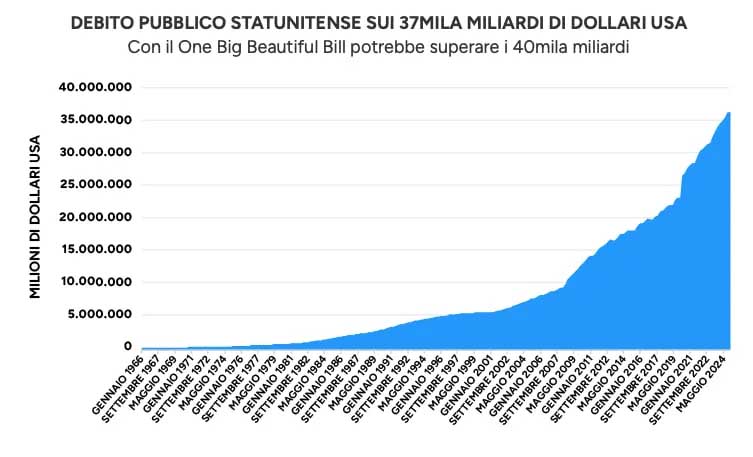
First operation: increasing import duties with various excuses. According to the World Bank, the weighted average tariff in 2022 was 1.5%. With the duties imposed and planned, it is estimated to reach 15.8%. This is a remarkable result, given that, according to the US Treasury, the revenue in 2025 was US$287 billion, about three times that collected the previous year. On the other hand, the clock ticking away the debt (ref. 2) continues to mark a steady, or rather, more intense increase. What these three hundred billion Dollars were used for is unknown. It seems, then, that the contribution (or rather, levy) distributed around the world, together with that paid by each American family, amounting to $1,100 in 2025 and $1,500 in 20263, served only as a smokescreen to show solvency.
The second operation was the strangulation of Venezuela, rich in oil and resources, which ended with the illegal kidnapping of Maduro, which cost, among other things, the lives of a hundred people (a trifle compared to the killings in the Gaza Strip). The Venezuelan affair was interspersed with a bombing in Nigeria, which, coincidentally, is rich in oil and resources. Both events were a partial failure, but, like the first operation, they are mirrors, albeit slightly cracked ones.
The third operation concerns the acquisition of Greenland. The excuse is US security (doesn’t the security of neighbouring States count?), but in reality it would serve to show creditors that “That’s how it is where you can do what you want, and ask no more” [quote of a verse in Dante Alighieri’s “Inferno” within the “Divine Comedy”]. Obviously, faced with such power, who can refuse to renew the Treasury bonds and who can disdain the refuge of the greenback? Indeed, with the One Big Beautiful Bill Act, which offers generous concessions, the debt can happily grow by $3.3 trillion in ten years, exceeding the trivial value of $40 trillion. Pinzillacchere! [sic, i.e. trifles!] Is this also a smokescreen?
Even the somewhat boastful threats directed at Iran may refer to this need. However, this issue is part of a more complex context that will be discussed later.
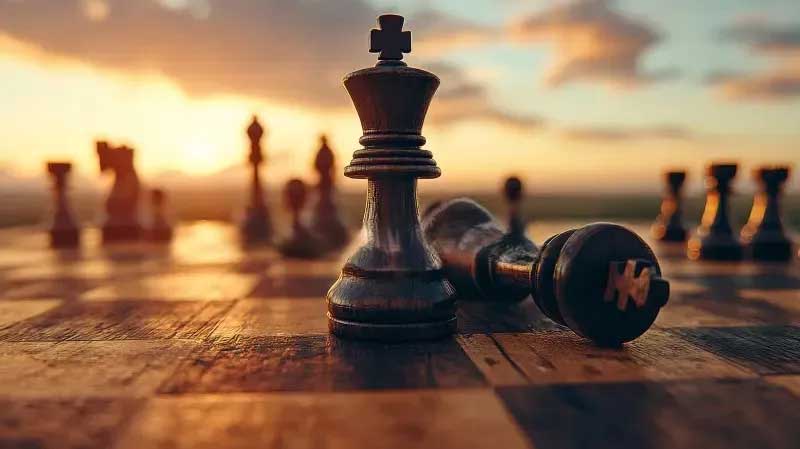
Many wonder why the leaders of the New World do not react and seem to passively accept this bullying behaviour. Perhaps these observations are like those of an amateur watching a chess game. The moves seem foolish, but in reality, the cocky player has got himself into a Zugzwang situation, the term used in chess to indicate that whatever move is made, it will worsen the situation and that, even if there are no immediately effective moves, the path to checkmate is assured.
Let us return to the three conditions. The “soft” power essential to maintaining hegemony, built on the so-called “rules-based order”, has been disintegrated by illegitimate actions that have not respected any rules, even if “pro domo mea” [Latin for “in my favour”]. The bullying behaviour is evident to the entire world population, except perhaps to European sycophants. The responses of the leaders of the New World are therefore in line with sophisticated chess strategies. A good chess player does not let a pawn be taken lightly: losing a pawn for a good player is always part of a well-defined plan, and the amateur watching, and perhaps even the opponent, cannot even begin to imagine the underlying strategy. For this reason, it can be assumed that non-intervention in the Gaza Strip, Syria or Venezuela is equivalent to sacrificing a pawn.
Intervening to oppose obvious forms of criminal cruelty involves the use of resources without any guarantee that such cruelty, which is clearly perceived by the citizens of the New World, will be punished. The punishment, on the other hand, will be checkmate. The sacrifice of the pawn (sad but functional) is a Zugzwang operation, as it contributes to the destruction of “soft power”. In the West, everything is done to mask misdeeds, given that journalism has become an advertisement for power populated by brainless fakers, but the New World sees and is horrified.
Tariffs also lead to a path towards Zugzwang. They generate undue immediate revenue, but they harm the very population of those who impose them and, in the medium term, redirect the flow of goods and favour alternative trade agreements. One example is the recent agreement between Canada and China for the import of 49,000 electric vehicles, offset by Canadian exports, such as yellow peas: a deal worth around $700 million a year. Apparently, the decision comes at the right time, as farmers are now planning their sowing.
China’s counter-move in response to the Zugzwang tariffs is ingenious. It does not respond with more tariffs, but finds a more painful solution that serves a broader objective: to send the message that “your technological supremacy is a giant with feet of clay”. In fact, it is blocking exports of rare earths, which are vital for high technology, requiring special authorisations for products that contain even minimal percentages of Chinese rare earths. [See also this blog post by former CIA analyst Larry C. Johnson outlining China’s silent, but tough response to the US kidnapping of the Maduros]
The military power of the West is substantial, even if there is a lot of fluff and a grandiose waste of money. Eroding it is no easy task, but Russia, having lost patience with NATO’s continued advance towards its borders, is achieving excellent results. The beauty of it is that the goals are not the lightning conquests preconfigured by foolish commentators; the objectives have been stated from the outset: to demilitarise and denazify, as Putin has clearly said. He was talking about Ukraine, but in reality he meant the West. Demilitarisation means depleting weapons stocks and neutralising armies. Denazification does not mean eliminating ideology, but eliminating its bearers.
These two objectives have been achieved to a good degree, given the significant reduction in weapons stocks, such as Patriot missile reserves, which have also been wasted in Israel, and the shortage of other systems for waging war.
For the neutralisation of armies, we must wait for them to commit themselves, and it seems that they have little desire to do so. The sending of weapons galore, systematically destroyed by Russian bombing, has proved to be a move that leads to Zugzwang. The goal of denazification has also produced valuable results, although the ringleaders, somewhat fearful, remain holed up in hiding places. However, military power is now shaky. It is easy to bully weak countries, but confronting the leaders of the New World is another matter.
Iran is a separate issue. This country is not the equivalent of a pawn on a chessboard, but rather a bishop or, perhaps, a rook. For this reason, chess players do not allow it to be taken lightly. Any perceived threat is carefully analysed and countermeasures are meticulously prepared.
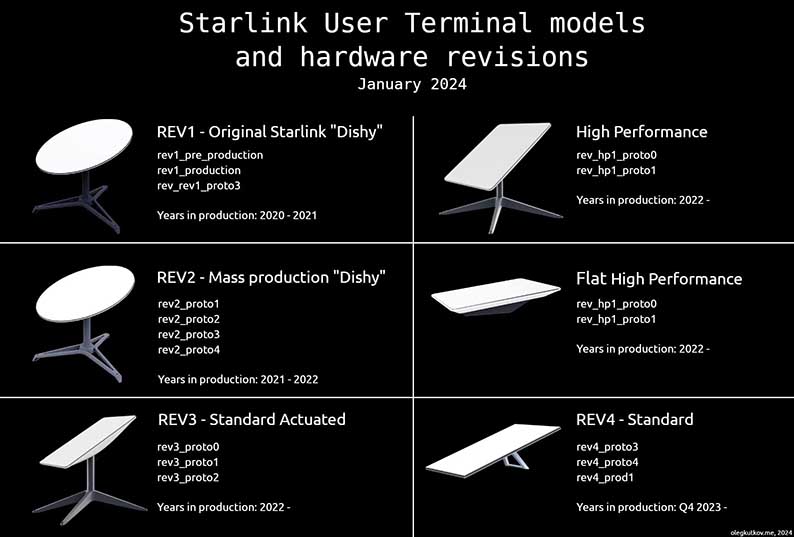
It is therefore believed that, as shown in the so-called 12-day war, the reaction to a surprise attack could be catastrophic for Israel and US bases (and perhaps for ships, who knows, aircraft carriers). Moves that lead to military Zugzwang are now avoided, in a moment of lucidity. Instead, there has recently been a move towards “classic” Zugzwang, called the colour revolution, with the novelty of the use of a disproportionate number of Starlink terminals (then requisitioned by the thousands) to coordinate the riots.
The counter-move was to deactivate the satellite connections, which was considered unseemly by the Americans, who argued, more or less, that the web is like bread. It must be assumed that the use of Starlink was anticipated and that the countermeasure was already in place. In other words, the “colour revolution” move was expected at the gate to channel it towards Zugzwang.
The above seems to indicate that the end of hegemonic domination and the total separation between the West and the New World are inevitable, and that, due to the moves of a bold poker player engaged in a game of chess, they are quite close in time. Economic and trade relations will dry up; costly military power will be unsustainable; the West will become (or already is) a quarrelsome and desolate wasteland. The only question is whether the vassals, vavasors and valvassini will follow their master into collapse. Perhaps the vassals, more prudent than the others, will save themselves.
There are doubts about the other two categories. Italy, as a good valvassino, now faithfully follows its master. It could save itself if it managed to free itself from the bonds that bind it and began to think about its own interests, looking at the New World as an opportunity to be seized, which, alas, will vanish very quickly.
* * *