
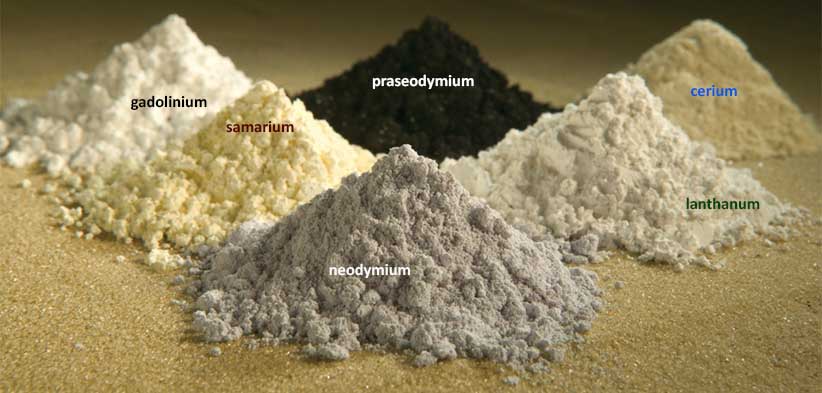
China decisively played the rare-earth card. America is too dependent, too vulnerable. Ultimately, it had to compromise. But this raises the deeper question: why did the U.S. walk willingly into a self-made trap? The answer lies in its deep-rooted addiction to neoliberal economics. For four decades, neoliberalism taught American policymakers and corporate executives the same doctrine: specialize where margins are highest, outsource the low-margin messiness of production, and let global markets “optimize” the rest – Peter Yang 1
Michael Hudson – one of the few economists to attract lay audiences, in his case beginning in 1968 with Super-Imperialism: The Economic Strategy of American Empire – has for decades been skewering the short-termism baked into neoliberalism as the Chicago Schooled West, its governments captured by rentier oligarchs, 2 offshored manufacturing when they found it more profitable to export capital (and jobs) to the global south, while at home optimising conditions for rent/debt extraction in burgeoning FIRE – finance, insurance and real estate – economies.
But financialising the imperial hub created a disconnect between GDP and real wealth creation to the point where, in the proxy war in Ukraine, the lower GDP of Russia – John McCain’s “gas station with nukes” – led a US-captured West to think she could be brought to her knees both militarily and – Joe Biden’s “we’ll reduce the rouble to rubble” – economically.
What could go wrong? Only that on top of the West confusing GDP with manufacturing capacity to wage a war of attrition, the dirigisme of post-Yeltsin Russia’s arms sector has in the Ukraine shone a terawatt beam on the Milo Minderbinderism of America’s military industrial complex.
Take the ability to swiftly raise mass production of ordnance and other materiel:
Surge capacity means maintaining slack – plant standing idle – to enable a near instant stepping up of arms production when needed. Such wastefulness from a profit-centric standpoint requires levels of state oversight which are anathema to the neoliberal mind. Add to this the fact of Raytheon et al having every incentive – costs + 10% – to make eye-wateringly expensive weaponry which can wow arms fairs, and may do lethally well in seven-day wars on the global south, but whose shortcomings – inability to produce at scale, and unreliability in the heavy usage of protracted war as opposed to the quick-win conditions of “shock and awe” – stand exposed in the Ukraine. Ditto that revolving door between government and the military industrial complex.
Five things to know about Kiev’s ATACMS, footnote 1
In July 2022 I wrote US diplomacy as Greek tragedy, citing Michael Hudson on the Sophoclean drama, Oedipus the King. Now here’s the thing. Oedipus knows his destiny, written in the stars, to be incest and parricide. The tragedy lies in the fact his considerable efforts to avert that end serve only to advance it. Similarly, the US empire’s efforts to maintain global dominance serve only to advance the very outcome Western strategists have feared for five centuries: a Eurasia united at its eastern and western poles …
… Washington’s psychotic refusal to accept multipolarity having driven Beijing and Moscow into ever closer embrace. 3
As it was with Oedipus and destiny, and as it was with those own-goals in Ukraine, so it is with US self-sabotage – and not just under Trump 4 – in the arena of rare earths.
Over to Peter Yang, writing nine days ago on the China Academy website:
The Real Lessons of China-US Rare Earth Competition
America’s dependence on rare earths isn’t accidental. It’s a structural asymmetry resulting from deliberate choices: China planned and invested for decades, while U.S. neoliberal ideology outsourced the foundation of high-margin industries, creating a critical strategic vulnerability.
Why is America so dependent on Chinese rare earths? This question remains puzzling even in China. Americans have debated their rare-earth vulnerability for more than fifteen years, and yet it is shocking to see almost no progress made across half a generation. To borrow Mr. Trump’s phrasing, “China couldn’t believe its luck.”
The earliest warning came in 2010, when China leveraged rare-earth exports during a territorial dispute with Japan. American media erupted with coverage, highlighting a glaring strategic weakness: while the U.S. was capable of mining rare earths, China controlled nearly 90% of global processing capacity. Without China’s processing plants, EV production lines, precision guidance systems, and advanced fighter jets would be paralyzed overnight. The danger was so clear that House of Cards, the hit Netflix political drama, dramatized a scenario in which China threatens a rare-earth export ban. Yet despite this cultural wake-up call, Molycorp—the last U.S. company capable of processing rare earths—collapsed in 2015 after losing competition against China.
If Washington failed to absorb the lesson in the 2010s, the 2018–2020 trade war delivered an unmistakable warning. Beijing explicitly signaled that rare-earth exports could be cut off. From any rational perspective, this was a moment for decisive action.
There were indeed brief flashes of reversal. James Litinsky, the CEO of MP Materials, made repeated television appearances after 2019, confidently proclaiming that America would break China’s rare-earth monopoly. But these optimistic speeches masked an unspoken truth: more than half of the U.S. ore mined still had to be shipped to China for refining, while the remainder went to Australia to be processed by Lynas Corporation in Malaysia. America’s supposed “rare-earth independence” was built entirely on foreign processing infrastructure.
Ultimately, the rhetoric evaporated as China and America reached a trade truce in early 2020, removing the sense of urgency around rare earth shortage. As a consequence, Imports of rare earth continued and domestic processing capacity stagnated. During President Biden’s four years in office, despite promises to “build back better,” there was nearly zero investment in STEM talent or industrial R&D necessary to revive domestic processing. No multi-agency coordination emerged, project-choking regulations remained untouched, and total government support amounted to only roughly $300 million—a trivial sum in industrial-policy terms.
This stands in sharp contrast to the semiconductor sector. The CHIPS Act, passed in 2022, authorized around $52.7 billion in subsidies and tax credits for chip manufacturing. By 2024, over $32 billion in grants and $29 billion in loans had already been allocated—more than 200 times the investment in rare earths. From an industrial-strategy perspective, this imbalance is irrational. While chips themselves contain almost no rare earth materials, the machinery used to produce them does: fabrication robots, servo motors, lithography chambers—all depend heavily on neodymium magnets and specialized rare-earth coatings. America’s massive investment in fabs thus created new dependencies by expanding its exposure to minerals it does not control.
The strategic incoherence becomes even clearer through the lens of the AI race. AI models require vast data centers filled with GPUs. Cooling those data centers requires thousands of high-RPM fans built with rare-earth magnets. And the U.S. military’s vision of AI-enhanced warfare—from satellite systems to radar arrays—rests heavily on rare-earth-dependent components. If China stops exporting rare earths, the U.S. loses not only EV motors but also the technological backbone of its AI-driven military systems.
This flawed industrial planning explains why China decisively played the rare-earth card. America is too dependent, too vulnerable. Ultimately, it had little choice but to compromise. But this raises the deeper question: why did the U.S. walk willingly into such a self-made trap?
The answer lies in its deep-rooted addiction to neoliberal economics. For four decades, neoliberalism taught American policymakers and corporate executives the same doctrine: specialize where margins are highest, outsource the low-margin messiness of production, and let global markets “optimize” the rest. That doctrine functions well in consumer technology but fails catastrophically when strategic bottlenecks determine national security.
Semiconductors sit at the glamorous, high-value end of the supply chain and fit perfectly into the neoliberal worldview. Chips are high-growth, high-margin, innovation-driven, easy to champion politically. Fabs create headline jobs. GPU production drives stock-market euphoria. With CEOs of the chip industry becoming demi-gods, buying the stocks of star chip companies has become the new gospel of prosperity, and investing in chips produces instant political mileage. The middle class cheered on the market rally while the rich placed bets on when the bubble would burst. Even the lower class could get jobs building the massive data centers. Rare-earth processing, by contrast, is dirty, low-margin, and heavily regulated. It offers no Wall Street narrative, no Silicon Valley stardust, no AI hype.
The result was a structural bias: subsidize the apex of the tech pyramid, ignore the foundation. America has since been trapped in its own propaganda loop: “chips are everything; chips are the future; chips define power.” That loop blinded policymakers to the underlying fragility: without rare earths, the entire chip ecosystem collapses. Neoliberal ideology has become so blinding that American leaders came to believe China would not use its chokehold on rare earths, assuming it was compelled to play by the rules of global capitalism. But why would China do that if America broke the rule first by seeking to isolate China from global chip supply chains?
China has in fact been planning to play a different game from the beginning. Since the 1980s, as China opened to the world, it began to hone its strategic masterstroke. Then the Chinese leader Deng Xiaoping famously said that ‘the Middle East has oil, but China has rare earths. This is an early recognition that rare earths are not mere commodities—they are strategic chokepoints that can be leveraged just as OPEC engineered oil prices in 1973. This foresight shaped national industrial planning: rare earths were integrated into long-term economic and military strategies.
Learning from America’s chip ban, China executed coordinated industrial policy. Instead of fragmenting responsibility across private firms and competing agencies, China centralized decision-making. State banks financed infrastructure in mining regions. Provincial governments coordinated transport networks linking mines to processing plants. Smaller operators were consolidated into larger, more efficient state-backed conglomerates capable of achieving scale. China vertically integrated the entire supply chain—from extraction to separation to magnet manufacturing—ensuring that value accumulation happened domestically. By 2025, China’s rare earth supply chain is internally transparent to China’s government, with all segments of the supply chain documented and a comprehensive monitoring system in place. In a national emergency, no industrial actor can act independently as every trace of refined rare earth can be tracked with harsh punishment for any operator that violates the export control.
Crucially, China invested heavily in STEM talent and technical expertise. Universities trained more than 120,000 chemical engineers and material scientists who mastered separation chemistry and magnet design annually, with over 2,000 of them specialized in rare earth production. State labs worked alongside industry on process optimization and environmental control. An entire ecosystem of talent emerged—scientists, technicians, engineers—capable of maintaining, expanding, and modernizing rare-earth processing capacity. Such a STEM workforce would take America decades to match even as China’s population ages.
This is the structural asymmetry at the heart of the rare-earth crisis: China planned, invested, coordinated, and trained its way into a position of dominance. America outsourced, deregulated, and financialized its way into dependence. And now, in the age of AI, that dependence has become a strategic liability that even trillions dollar investments in chips cannot compensate for.
* * *
- China Academy has Peter Yang as its ‘Geopolitics and Foreign Policy Commentator’. A little digging shows him as CEO of the newly created Morocco operation of Shenzhen based BTR – a global player in the rare earth reliant lithium-ion battery sector.
- A recent post, How wealth disparity erodes democracy, illustrates, albeit in a different context and for a different purpose, the mechanisms through which rentier elites capture government.
- Iran too. Re the West’s half millennium nightmare of Eurasian alliance, Persia stands at a geostrategic crossroads: latitudinally linking China to a Europe more an appendix to Asia than discrete continent; and longitudinally linking Russia to a Middle East muttering dark seditions under despots anxiously pondering the reliability of their Washington backers:
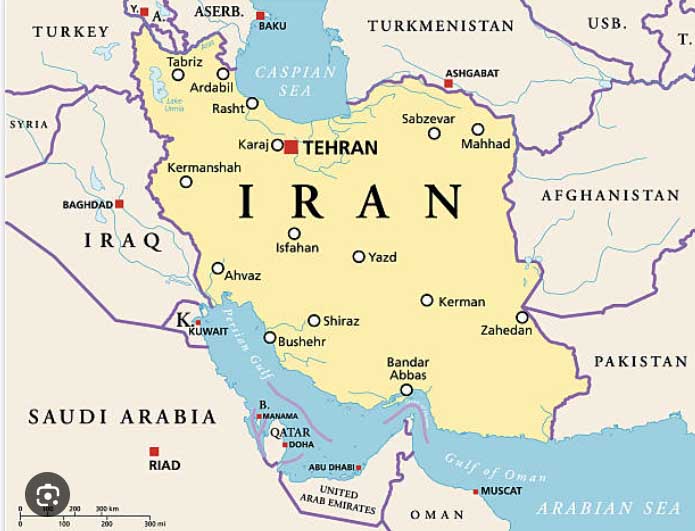
Needless to say, four and a half decades of US imposed privation following the fall of the puppet Shah are now, with unipolarity on the ropes, bearing fruit in driving Tehran firmly into the arms of China rising and Russia resurgent.
- To be sure, Trump and Bessent sleep-running into a trade war they could never win was a car crash of the kind we’re also seeing over Venezuela and elsewhere. But while Trump made economically and politically illiterate promises to the MAGA – bringing American jobs back home – the fact he had zero chance of honouring them has drivers, as with rare earth suicide, more deep rooted than his oafish plays on the geopolitical chessboard.
“Integration” (horizontal as well as vertical); “Collaboration”; “Cooperation”; “Coherence”
Joined up thinking.
The cultural paradigm which forms the base of US/Western structures and processes does not incorporate such features into its model – considering such concepts and their practice to be akin to “communism” and therefore ‘anti-American’.
Time to trot out the relevant Yorkshire Ranter piece again:
https://www.harrowell.org.uk/blog/2018/01/31/in-the-eternal-inferno-fiends-torment-ronald-coase-with-the-fate-of-his-ideas/
Meanwhile, The Orange one launches the Genesis Project…..
https://www.whitehouse.gov/presidential-actions/2025/11/launching-the-genesis-mission/
……focusing on, yes, you’ve guessed correctly, AI.
Not a lot in there about tackling the mismatch in manufacturing capacity for processing the rare earths in the USA which the AI focus of Genesis will require. Nor addressing the deliberate loss of the skills, knowledge, expertise and experience all the way through the education system – from STEM right down to the shop floor, on the tools, level – from decades of deindustrialisation.
Certainly not from those currently undermining their own education system and deporting in chains the foreign workers required to bring the US workforce up to speed skills, expertise and experience wise. Which will take several generations at best.
I’m reminded of the occasion in which my eldest, aged about three at the time, picked up a calculator at his grandparent’s house, pointed it at the TV, and spent five minutes desperately pressing buttons trying to get the TV to come on.
You know when you’ve been Tangoed:
https://www.youtube.com/watch?v=cqm-s6h8l1I
That’s what you get from losing (or never really having) the basic attributes of civilisation – capacity for realistic thought, recognition of spiritual values, recognition of the value of education, recognition of the value of equality, recognising that wishful thinking is not a substitute for sanity, rejection of materialism, etc. (Unfortunately the ancient Greeks had all these, and still managed to destroy themselves, with a little outside help from Rome).
Not that Europe/UK is any better. But at least the last hand in this particular game is being dealt.
Really, as Oscar Wilde said, “You’d have to have a heart of stone not to laugh”