
Some flaws attributed to the president of the Russian Federation never feature in Western corporate media otherwise falling over themselves to damn him to hell and back.
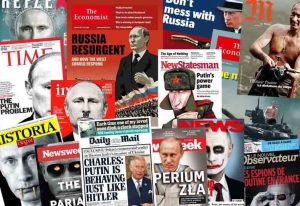
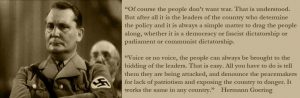
One, the subject of my post four days ago, “Putin must finish the job in Ukraine”, is that of excessive caution. One accuser – American gamekeeper turned poacher Paul Craig Roberts – went so far as to say long before Ukraine that after US aggression itself, the second greatest threat to world peace is Russian appeasement of it. Of course, the “appeasement” charge – often as not invoking Chamberlain, Munich 1938 and an emboldened Hitler – is routinely used by hawks in the West to denounce the few who query NATO’s role and budget, and the fewer still who demand a scrap of evidence that Russia covets Paris or London. 1 It’s true that Western publics are so brainwashed – see Washington cuckoos its ‘allies’, footnote 2 – that in the unlikely event of most folk even hearing of its being levelled at Putin (in the main by fellow Russians) the charge would seem outlandishly counterintuitive.
Yet the logic is as old as the hills.
*
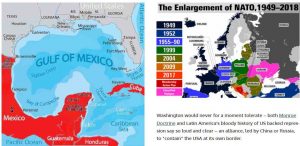
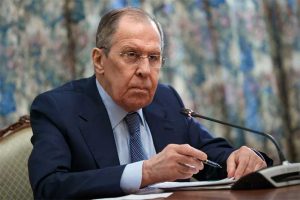
Another alleged flaw is related: viz, that not only Putin but his outwardly hard headed foreign secretary, the redoubtable Sergey Lavrov, have been irresponsibly credulous in taking any US assurances at face value. If true, the fault would be inexcusable when Putin has voiced feelings of personal betrayal by an Angela Merkel who boasted, as did François Hollande, of having fooled him into believing the Minsk Accords to be genuine attempts to end civil war in Ukraine following the US orchestrated Maidan coup of 2014. Instead, said Merkel on at least three occasions, they were decoys to buy time for arming Ukraine as a proxy in the US war on Russia against Russian aggression.
*
Fool me once, the saying goes, and shame on you. Fool me twice, shame on me. So were Putin and Lavrov unforgivably credulous in taking Trump at his word last August at the summit in Anchorage, Alaska? One who thinks so is Andrew Korybko, writing today.
Lavrov’s Realization That Anchorage Only Bought Time For Ukraine To Rearm Was Long Overdue
Russia can either decisively “escalate to de-escalate” in its own right to swiftly end the conflict on as many of its terms as possible, carry on as usual amidst this new “war of attrition” at tremendous risk to itself, or freeze the conflict.
Lavrov sheepishly said during a roundtable event last week that “I do not even want to suspect that Alaska, like the actions of the Europeans, was designed to buy time to rearm the Kyiv regime. I don’t even want to think about it. But in reality, things turned out the way they did.” This came three and a half years after former German Chancellor Angela Merkel admitted in December 2022 that the Minsk Accords were just a ruse to buy time for Kiev to rearm.
Putin famously responded a month later that “We endured for a long time, tried to reach an agreement for a long time. But, as it turns out now, we were simply led by the nose, deceived. It’s not the first time this has happened.” Given that he cautioned Russia’s strategic forecasters against indulging in “wishful thinking” during a speech at the headquarters of his country’s Foreign Spy Service in summer 2022, it was widely assumed among “Non-Russian Pro-Russians” that he wouldn’t fall for a similar ruse.
Lo and behold, that’s precisely what happened after Trump reneged on the “Spirit of Anchorage”, which an RT contributor described as him having agreed to coerce Zelensky into withdrawing from Donbass in exchange for Putin then declaring a ceasefire. It’s a matter of speculation whether Trump intended to dupe Putin or whether he just caught too caught up in retrospect planning Maduro’s capture and the Third Gulf War. The outcome, nevertheless, is the same since Trump didn’t do what he promised Putin.
Trump is now “escalating to de-escalate” through a “war of attrition” because he senses weakness from Russia due to the new “cordon sanitaire” around it and thus believes that strengthening Ukraine’s strike capabilities, imposing more sanctions, and provoking unrest can coerce energy-related concessions. The Wall Street Journal reported on the aforementioned three-phase strategy last fall so Russia would have presumably been aware of it but still maintained hope that Trump would implement his deal with Putin.
This “wishful thinking” has now been shattered after he signed the G7 joint statement calling for more arms to Ukraine and sanctions on Russia, which preceded a report that he told Zelensky to act “more boldly” against Russia after being impressed by its recent US-backed strategic strikes. To be sure, Russia had realized even before this that something was wrong after Putin’s close advisor Yuri Ushakov played dumb about the “Spirit of Anchorage” last month, but now it’s indisputable that it no longer exists.
Seeing as how there’s no longer any credible hope that Trump will coerce Zelensky into withdrawing from Donbass by cutting off arms, funds, and intel to Ukraine, not even in exchange for a resource-centric strategic partnership with Russia, only three options remain for Russia. It can either decisively “escalate to de-escalate” in its own right to swiftly end the conflict on as many of its terms as possible, carry on as usual amidst this new “war of attrition” at tremendous risk to itself, or freeze the conflict.
Unless he’s bluffing about “escalating to de-escalate” and abruptly implements his half of the “Spirit of Anchorage”, which is unlikely after all that’s recently happened, then it would mean that the past year since their meeting achieved nothing at all other than getting Russia’s guard down. Even if they agreed on that quid pro quo, however, Russia would have probably kept the same tempo. Now that its “spirit” is discredited, Russia has the pretext for ramping everything up, but it’s still unclear whether Putin will.
Since we’re playing the blame game I’ll add my own two penn’oth on Andrew Korybko, and the blindness to empire of his Westphalian perspective. 2 He says nothing about a truth set out in many a think tank paper, most fully in the 2019 Rand Corporation report, Extending Russia, that Washington has offloaded on Europe the costs of keeping Russia bogged down in Ukraine, to allow the US to focus its dwindling resources on other squares on a global chessboard – many of which, to his credit, Andrew Korybko is one of the few to keep an eye on even if he does miss the wood for the trees – in its fight to thwart China rising.
* * *
- With Europe, and UK prime minister in waiting Andy Burnham, committed to raising arms spend while cutting social security budgets, we can be sure the “appeasement” charge in its more familiar Russophobic context will be heard with growing frequency.
- By ‘Westphalian perspective’ I mean an understanding of all nation states as pursuing their interests in conditions, absent world government, of international anarchy. Other adherents being, whatever may divide them, Glenn Diessen and John Mearsheimer. This perspective, while affording analyses superior to the fairy tales peddled by mainstream politicians and corporate media, either fails to reckon sufficiently with the distorting effects of an empire whose lead nation claims exceptionalist status, or assumes other nations – most importantly China – will do the same given half a chance.
To take this idea seriously, you would have to postulate that Putin and Lavrov have some kind of mental illness. It is possible that they thought they could put the US into a position of being shamed or cajoled into some kind of moral response, but not that they actually believed US statements. Additionally, some in the affluent classes in Russia seem to have an inferiority complex towards the west, which may have influenced government advisors. I’ve been reading evidence of this on the RIAC website for years, and commenting adversely to them, but they pretend not to be able to read comments. I don’t find Korybko to be a very convincing commentator – possibly because he seems to share the above noted complex.
Not necessarily. Wishful thinking, including the desire to avoid Armageddon, can have the most astute and level headed minds believing what they want to believe. Korybko’s criticisms are echoed in milder form in the first six minutes of this Duran dialogue between Alex Christoforou and Alexander Mercouris: for the most part admirers of Putin and Lavrov. Given known facts, we must leave room for the distinct possibility that (a) both Trump and the Russian leadership believed they had a deal in Alaska (going well beyond an MoU) which a Marc Rubio emerging as the driving force in Team Trump has trashed on behalf of the corporate oligarchies which rule America; (b) despite countless historic indicators of US bad faith spanning numerous administrations, Putin and Lavrov have been overly trusting.
Those critical of Putin as too placatory and cautious, in prosecuting a war they say should have been won long ago, form a far wider constituency than a few disgruntled affluent Russians with an inferiority complex!
I don’t know if you are familiar with the work of Alexander McKay at the Liberation News Network. He has covered what he calls Putin’s Bonapartist regime and how that affects his, Putin’s, dealings with the western imperialists as well as with the RF’s internal dynamics. He made a three part series entitled Russian Bonapartism and the Ukraine recently, available at https://www.youtube.com/watch?v=v00eRQZ51IE. It is very much him talking to camera but McKay seems well steeped in Marist /Leninist theory, being a member of the CPGB(ML) so I guess looks at the situation from that perspective.
Keep up the good work. I find it helps pull a lot together for me as I seem to be moving further left as I get older and find myself doing a lot of reading to catch up. The latest being Fannon’s Wretched of the Earth. Maybe no longer have to work for the man has helped with that.
Thanks Gerald. No, the name is new to me. I’ll watch the video you link to.
Re your moving Left, here’s a personal statement – written, for some reason now lost to me, in the third person – I posted on my About page when I created the site in 2015:
It’s still there. Though my understanding has since undergone many significant shifts, I see no reason to amend or replace it.
Just finished watching. Superb.